Washington Talks on the Moroccan Sahara… Signs of a Consolidating Realistic Solution Under Moroccan Sovereignty
By Meryem Hafiani
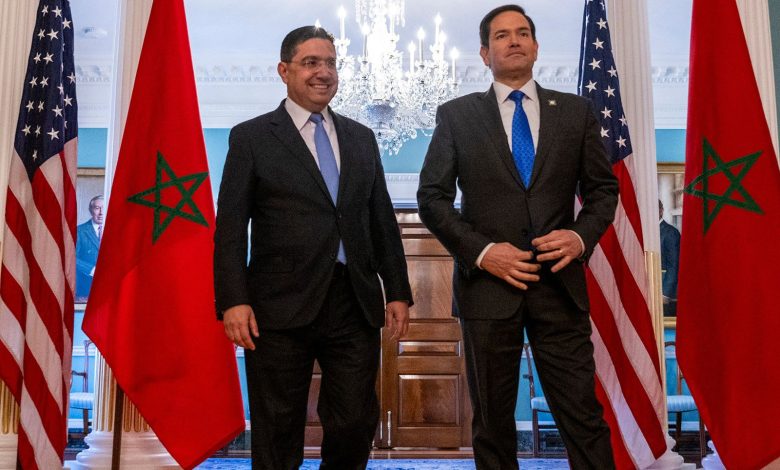
The U.S. capital, Washington, D.C., will host a new round of diplomatic consultations on the Moroccan Sahara issue on February 23–24, as part of renewed international efforts aimed at advancing a political settlement to this decades-long regional dispute. The consultations are being convened at the invitation of Massad Boulos, a special envoy of U.S. President Donald Trump for Africa, who is leading initiatives to revive dialogue channels among the concerned parties.
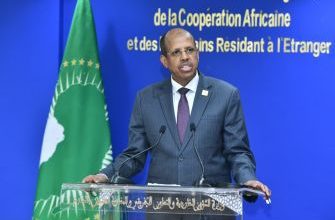
According to information reported by European media sources closely following the file, the upcoming round is expected to bring together the foreign ministers of Morocco, Algeria, and Mauritania, along with a representative of the Polisario Front. The meeting will also take place in the presence of Staffan de Mistura, the Personal Envoy of the UN Secretary-General for Western Sahara.
The format reflects an expanded dialogue framework similar to the “roundtable” mechanism previously adopted by the United Nations in recent years, which seeks to involve all stakeholders in the search for a realistic and lasting political solution.
These consultations come amid accelerating diplomatic activity surrounding the Moroccan Sahara issue, particularly following significant shifts in the positions of several major international powers. Many of these actors increasingly view the autonomy initiative proposed by Morocco in 2007 as the most realistic and viable framework for resolving the dispute.
In recent years, international support for the Moroccan initiative has grown markedly, whether through explicit recognition of Morocco’s sovereignty over its southern provinces or through political positions that regard the autonomy proposal as a serious and credible basis for a settlement. At the same time, the development momentum witnessed in cities of the Moroccan Sahara—such as Laayoune and Dakhla—has reinforced the region’s image as an emerging economic and strategic hub linking the kingdom to its broader African depth.
Available information suggests that the Washington meeting represents the second round in this diplomatic track in less than a month. Just last week, the Spanish capital Madrid hosted a preliminary gathering involving several officials concerned with the issue. Massad Boulos described those consultations as “constructive,” indicating a willingness among the parties to continue dialogue and explore common ground.
Washington’s choice to host this new round carries significant political symbolism, reflecting the United States’ intention to play a more visible role in pushing for a resolution of the dispute—particularly amid growing recognition that continued stalemate hampers development and stability efforts across the Maghreb and the wider Sahel region.
In this context, Morocco appears to be in a relatively comfortable diplomatic position, benefiting from the accumulation of international support for its autonomy proposal, the opening of an increasing number of foreign consulates in its southern provinces, and the large-scale development projects launched by Rabat under the new development model for the southern regions.
While the outcome of the Washington meeting remains uncertain, the mere convening of this round signals the return of the Moroccan Sahara issue to the forefront of international attention. It also underscores that a pragmatic political path—based on the autonomy initiative under Moroccan sovereignty—is increasingly taking shape as a serious option for bringing this long-standing regional dispute to a definitive and lasting resolution.